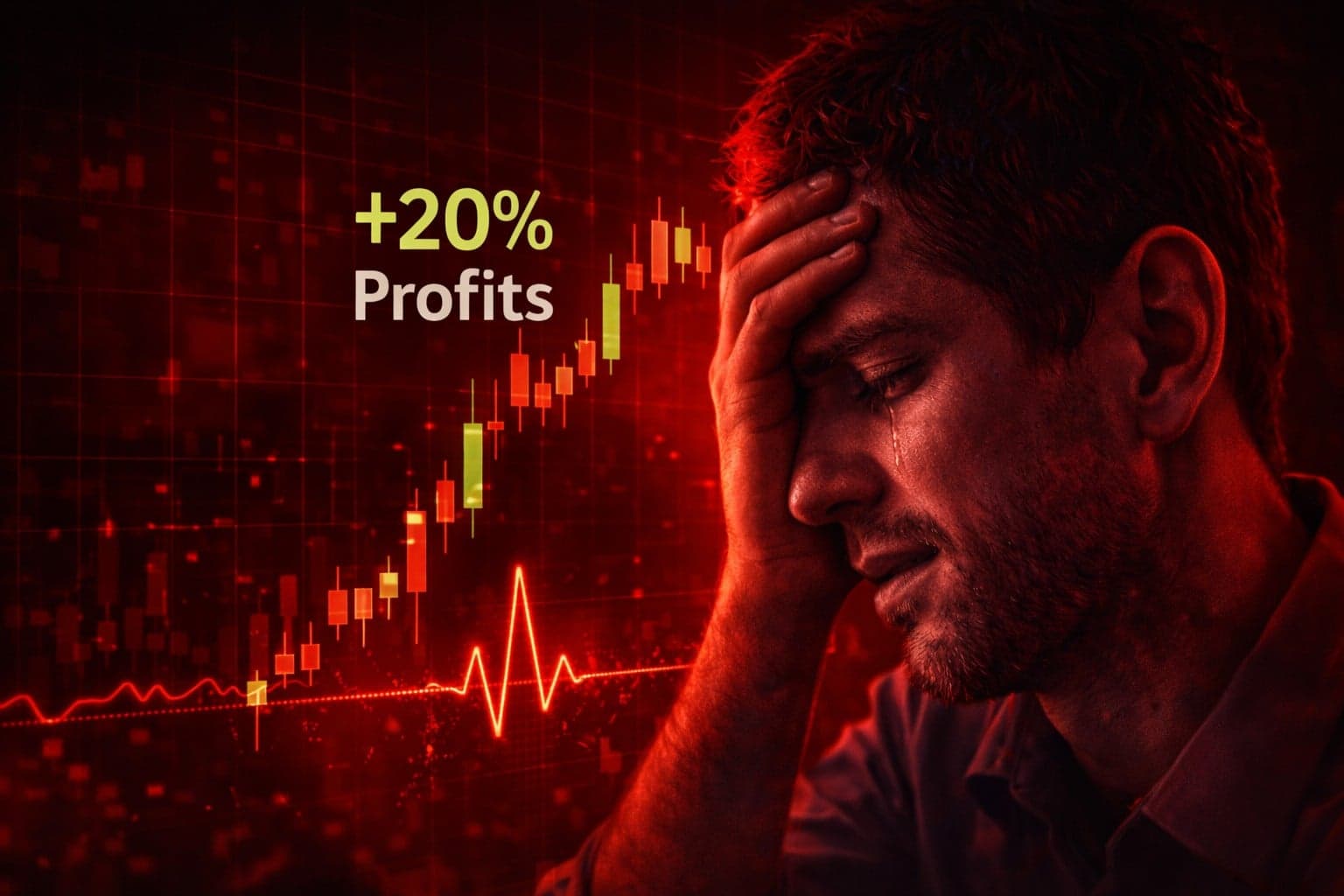
The Emotional Cost of Volatility: Why Endurance Fades Before Logic Does
Most discussions about volatility focus on numbers.
Standard deviation.
Drawdown percentages.
Historical ranges.
Yet in practice, volatility is not first experienced as a statistic.
It is experienced as repetition.
Repeated price swings.
Repeated uncertainty.
Repeated exposure to visible losses.
Over time, this repetition often creates something quieter and more corrosive than panic: fatigue.
Not the kind that triggers headlines.
The kind that slowly narrows attention and shortens patience.
Understanding the emotional cost of volatility requires looking beyond metrics and into lived experience - and into the structural conditions that determine how often investors must endure uncertainty.
Educational Notice: This page is intended for informational and educational purposes only. It does not provide financial, investment, or legal advice, nor does it recommend specific assets, predict performance, or guarantee outcomes. All investments involve risk, including potential loss of capital. Readers should consider their own circumstances and seek independent professional guidance where appropriate.
Volatility Psychology: Why Behavioral Endurance Weakens Over Time
At the beginning of an investment journey, volatility can feel manageable.
It is expected.
It is framed as temporary.
But as fluctuations persist, something shifts.
Losses do not necessarily grow larger.
They grow more familiar.
And familiarity, in this context, does not create comfort.
It creates accumulation.
Visible drawdowns demand emotional processing.
Each fluctuation requires renewed tolerance.
Each recovery requires renewed patience.
Over time, the effort required to remain steady increases - even if the strategy itself does not change.
Markets test capital. Volatility tests endurance.
This gradual accumulation is central to volatility psychology in investing: exposure compounds psychologically long before it compounds financially.
Focusing only on returns hides the real cost of investing. Risk exposure, drawdown tolerance, fee drag, and liquidity constraints often matter more than headline performance. If you want to evaluate investments beyond surface numbers, use a structured framework that reveals what truly impacts long-term outcomes.
How to Compare Investment Options Properly →Structural Exposure and the Emotional Cost of Volatility
Volatility is not only about magnitude.
It is about exposure.
The structure of an investment determines how frequently uncertainty becomes visible - and how often investors must re-engage with it.
Within the broader comparison of investment structure and behavioral sustainability, volatility exposure represents one of the primary dimensions shaping whether a strategy remains livable over time.
Certain structural conditions tend to intensify this exposure:
- High visibility of price movements
- Frequent performance feedback
- Extended periods without clear resolution
- Personal responsibility for allocation decisions
When uncertainty remains visible for extended periods without resolution, emotional tolerance tends to behave less like a fixed trait and more like a diminishing resource.
In volatile environments, sustainability is shaped less by isolated losses and more by the cumulative visibility of uncertainty.
The breakdown is rarely sudden. It tends to emerge gradually, through a progressive thinning of emotional tolerance rather than a dramatic collapse.
Over time, this becomes one of the structural causes of investor abandonment.
The Failure Mode Investors Rarely Anticipate
When investors disengage during volatile periods, the explanation often centers on logic:
- “The environment changed.”
- “This is different.”
- “The risk profile no longer fits.”
Yet in many cases, the breakdown is not analytical.
It is cumulative.
Emotional tolerance does not collapse in a single moment. It erodes quietly. The decision to exit rarely begins on the day of the exit. It begins earlier - in shorter attention spans, in quicker reactions, in quieter doubts.
This pattern often reflects structural causes of investor abandonment rather than sudden shifts in belief. When the design of exposure repeatedly tests tolerance, disengagement becomes less about conviction and more about accumulated strain.
By the time a change feels rational, the psychological endurance supporting the strategy has already weakened. This is where behavioral exposure - not return expectations - often determines sustainability.
Reframing Volatility as an Experience of Endurance
Volatility is commonly discussed as a measure of risk.
In lived reality, it is often experienced as a measure of endurance.
What ultimately differs is the level of psychological endurance in investing that each structure demands. The statistical profile may appear similar, yet the lived requirement for sustained tolerance can vary meaningfully across strategies.
Two strategies with similar long-term characteristics can feel radically different depending on how volatility is encountered:
- Continuous visible fluctuations
- Infrequent but prolonged ambiguity
- Sharp but short-lived drawdowns
Magnitude alone does not determine sustainability. Experience does.
Sustainability in investing is shaped not only by expected returns, but by the durability of the investor living through them.
Recognizing this distinction does not eliminate volatility. It clarifies why endurance sometimes weakens before logic does.
Where This Pressure Often Appears Next
When volatility fatigue accumulates, it rarely remains isolated.
Visible uncertainty increases the impulse to act.
Repeated action introduces its own structural strain.
Endurance shifts into intervention.
Intervention, repeated under uncertainty, becomes exhaustion.
In practice, this interaction often determines whether volatility reinforces discipline or quietly undermines it. This is where decision fatigue in investing compounds the emotional cost of volatility - not through market movement, but through repeated discretionary choices.
FAQ
Why does market volatility feel harder over time?
Because repeated exposure to visible fluctuations can gradually reduce emotional tolerance. Even when outcomes remain within expected ranges, the need to repeatedly process uncertainty can accumulate strain.
Is volatility always a sign that a strategy is failing?
Not necessarily. Volatility often reflects changing conditions rather than analytical breakdown. The emotional experience of volatility, however, can influence behavior independently of the strategy’s logic.
What does “emotional cost of volatility” mean?
It refers to the gradual erosion of psychological resilience that can occur when investors repeatedly confront visible uncertainty, drawdowns, and delayed recoveries.
Why do investors react differently to similar volatility levels?
Because volatility is experienced, not just measured. Frequency of feedback, visibility of losses, and duration of uncertainty can all shape how intense it feels.
How is volatility connected to decision fatigue?
Persistent volatility can increase the impulse to intervene. Repeated intervention, especially under uncertainty, can amplify cognitive and emotional strain over time.
Educational Note: This FAQ is informational and does not provide financial advice or recommend actions. Investing involves risk, including potential loss of capital.
 Written by